
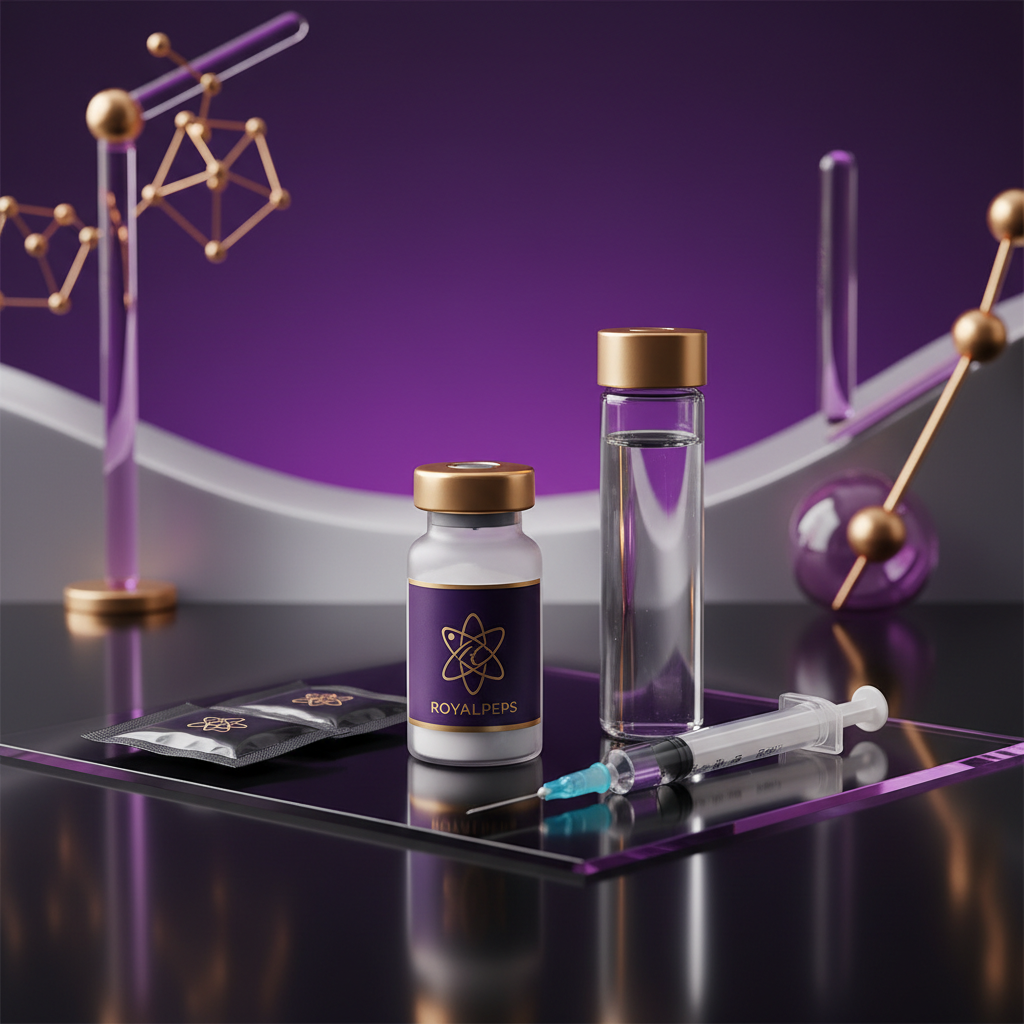
Why Reconstitution Is More Than Just Adding Water
If you've ever opened a vial of lyophilized peptide and thought, "I'll just add some water and call it good" — this guide is for you. Proper peptide reconstitution is a precise, science-driven process. Get it wrong, and you risk denaturing your peptide, creating inaccurate concentrations, or introducing contamination that invalidates your entire experiment.
Whether you're a seasoned lab technician or a first-time researcher stepping into the world of peptide science, understanding the fundamentals of reconstitution will protect your samples, your data, and your research investment.
What Does "Reconstitution" Actually Mean?
Peptides are supplied in a lyophilized (freeze-dried) powder form to maximize shelf life and stability. Reconstitution is the process of dissolving that powder into a sterile liquid solvent to create a usable solution for research purposes.
The goal is to achieve a known, consistent concentration — typically expressed in milligrams per milliliter (mg/mL) — so that any volumes drawn during experimentation are reproducible and accurate.
Choosing the Right Solvent: Bacteriostatic Water vs. Others
Not all solvents are created equal. The choice of solvent can affect peptide solubility, stability, and shelf life after reconstitution.
- Bacteriostatic Water (BW): The gold standard for most peptides. It contains 0.9% benzyl alcohol, which inhibits microbial growth and extends the usable life of your reconstituted solution — typically up to 28–30 days when refrigerated. This is the most widely used solvent in peptide research.
- Sterile Water for Injection (SWFI): A good option when benzyl alcohol may interfere with a specific assay. However, it lacks preservative properties, so reconstituted solutions should be used quickly — ideally within 24–48 hours.
- Acetic Acid (0.1%): Some peptides, particularly those with poor aqueous solubility (like certain growth hormone-releasing peptides), dissolve more effectively in dilute acetic acid. Always confirm solubility data for your specific peptide before selecting this option.
- DMSO: Reserved for highly insoluble peptides. Typically used as a co-solvent in small percentages, not as a primary solvent.
Pro Tip: When in doubt, start with bacteriostatic water. It works reliably for the majority of research-grade peptides and offers the best balance of compatibility and preservation.
Reconstitution Calculations: Getting the Math Right
This is where many new researchers stumble. The formula is straightforward, but errors here cascade into every downstream measurement.
The core formula is:
Volume of solvent (mL) = Mass of peptide (mg) ÷ Desired concentration (mg/mL)
For example: if you have a 5 mg vial and want a concentration of 1 mg/mL, you would add 5 mL of bacteriostatic water. If you prefer a more concentrated solution of 2 mg/mL, add 2.5 mL.
Practical concentration choices depend on your dosing volumes and the capacity of your delivery system (e.g., typical insulin syringe capacities). A higher concentration means smaller volumes per draw — useful when working with low-volume syringes.
👉 Skip the mental math entirely — use the RP Wellness Reconstitution Calculator to instantly compute solvent volumes, concentrations, and per-unit dosing volumes for any vial size.
Sterile Technique: The Non-Negotiable Foundation
Contamination is the silent killer of peptide research. A single breach in sterile technique can introduce bacteria or particulates into your vial, compromising the entire batch. Here's how to maintain a clean workflow:
- Work in a clean environment: Ideally a laminar flow hood. If unavailable, a still, clean surface away from air vents is your next best option.
- Swab everything: Use 70% isopropyl alcohol wipes on all rubber stoppers — both the peptide vial and the bacteriostatic water vial — before every needle insertion.
- Use a fresh needle for each insertion: Reusing needles introduces particulates and dulls the tip, which can core the rubber stopper.
- Inject solvent slowly along the vial wall: Never squirt solvent directly onto the peptide cake. Allow it to run down the glass gently to preserve the peptide's structural integrity.
- Never vortex: Roll the vial gently between your palms or swirl slowly. Vigorous agitation can denature delicate peptide bonds.
- Inspect before use: The final solution should be clear. Cloudiness, particles, or unusual color are red flags — do not use a compromised vial.
Storage After Reconstitution
Once reconstituted, your peptide solution requires careful storage to maintain potency and sterility:
- Refrigerate at 2–8°C (36–46°F) for short-term storage (up to 28 days with bacteriostatic water).
- Freeze at -20°C for longer-term storage. Avoid repeated freeze-thaw cycles, which degrade the peptide over time.
- Keep away from light: Many peptides are light-sensitive. Store vials in their original boxes or wrapped in foil.
- Label every vial with the peptide name, concentration, date reconstituted, and expiration date.
Common Mistakes and How to Avoid Them
Even experienced researchers make these errors. Here's what to watch for:
- Adding too much solvent by accident: Always measure precisely with a calibrated syringe. Eyeballing volumes leads to inaccurate concentrations.
- Using the wrong solvent: Sterile saline (0.9% NaCl) is not equivalent to bacteriostatic water and may cause precipitation in certain peptides.
- Reconstituting more than needed: Only reconstitute what you'll use within the stable storage window. Lyophilized peptide keeps far longer than a liquid solution.
- Skipping the alcohol swab: It takes five seconds and could save your entire experiment. Never skip it.
- Not accounting for dead volume: Syringes retain a small amount of liquid. Account for this in your calculations, especially when working with expensive or limited-quantity peptides.
A Quick-Reference Reconstitution Checklist
- ✅ Confirm peptide mass and desired concentration
- ✅ Calculate solvent volume (or use the RP Wellness Calculator)
- ✅ Select appropriate solvent (bacteriostatic water recommended)
- ✅ Swab all rubber stoppers with 70% IPA
- ✅ Inject solvent slowly along vial wall
- ✅ Gently swirl — never shake or vortex
- ✅ Inspect solution for clarity
- ✅ Label vial and store appropriately
All peptides offered by RP Wellness are intended exclusively for laboratory research purposes and are not for human consumption, clinical use, or veterinary application.