
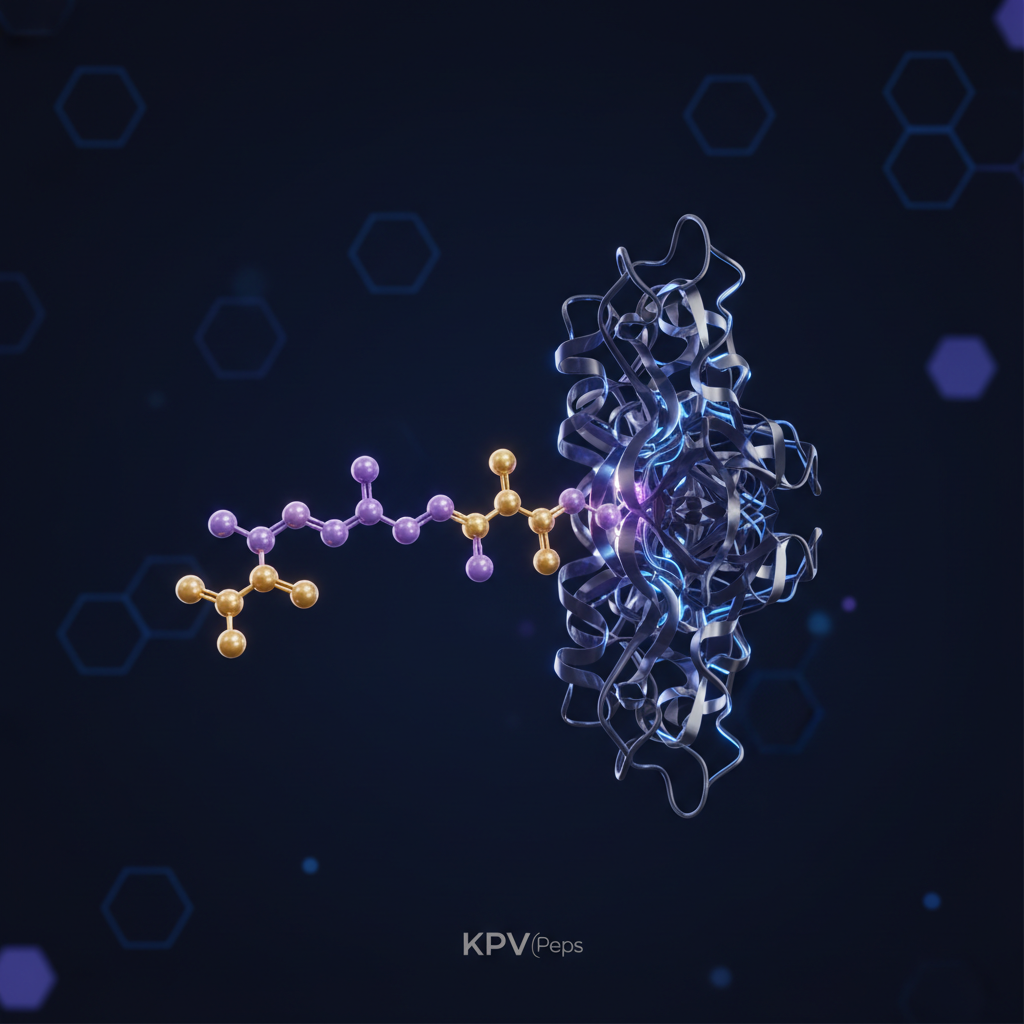
Introduction: Alpha-MSH and Its Bioactive Fragments
Alpha-melanocyte-stimulating hormone (α-MSH) is a 13-amino acid neuropeptide derived from proopiomelanocortin (POMC), a precursor protein with wide-ranging physiological relevance. Historically recognized for its role in pigmentation and appetite regulation via melanocortin receptors (MCRs), α-MSH has attracted considerable attention in immunological research due to its potent anti-inflammatory properties.
Among the most studied of its bioactive derivatives is the C-terminal tripeptide Lys-Pro-Val (KPV). This fragment, corresponding to residues 11–13 of α-MSH, has been identified in preclinical studies as retaining — and in some contexts exceeding — the anti-inflammatory activity of its parent peptide. Its small molecular size, relative stability, and receptor-mediated mechanisms make it a subject of significant interest in immunopharmacology and peptide research.
Molecular Targets: The NF-κB Signaling Pathway
The nuclear factor kappa-light-chain-enhancer of activated B cells (NF-κB) is a transcription factor superfamily that plays a pivotal role in orchestrating innate and adaptive immune responses. Under homeostatic conditions, NF-κB is retained in the cytoplasm in an inactive state bound to inhibitory IκB proteins. Upon stimulation by pro-inflammatory signals — including lipopolysaccharide (LPS), tumor necrosis factor-alpha (TNF-α), and interleukin-1 beta (IL-1β) — IκB kinase (IKK) phosphorylates IκB, triggering its proteasomal degradation and allowing NF-κB translocation to the nucleus, where it drives transcription of inflammatory mediators.
Dysregulation of NF-κB is implicated in a broad spectrum of inflammatory and autoimmune conditions, making it a high-priority target in translational research. KPV has been studied for its capacity to attenuate NF-κB nuclear translocation, thereby reducing downstream expression of pro-inflammatory cytokines including IL-6, IL-8, and TNF-α in cell-based models.
"The C-terminal tripeptide KPV inhibits NF-κB activation and reduces the production of pro-inflammatory cytokines, suggesting therapeutic potential in intestinal and systemic inflammatory conditions."
— Derived from findings reported in Kannengiesser et al. and related mechanistic studies.
Receptor Mechanisms: MCR-Independent and MCR-Dependent Pathways
The anti-inflammatory effects of α-MSH are classically attributed to its interaction with melanocortin receptors, particularly MC1R and MC3R, which are expressed on immune cells including macrophages, dendritic cells, and monocytes. However, research into KPV has revealed a more nuanced receptor landscape.
- MCR-dependent activity: KPV has demonstrated binding affinity at MC1R and MC3R, though with lower potency than full-length α-MSH. Activation of these Gs-coupled receptors elevates intracellular cAMP, which subsequently suppresses NF-κB activity and MAPK signaling.
- MCR-independent activity: Studies utilizing MCR antagonists and receptor-knockout models suggest KPV retains partial anti-inflammatory effects independent of classical melanocortin receptor engagement, possibly through direct modulation of IKK activity or interaction with intracellular transport mechanisms.
- Cellular uptake: Research has highlighted KPV's ability to be actively internalized into cells via the PepT1 transporter (SLC15A1), particularly in intestinal epithelial models, enabling intracellular access to inflammatory signaling nodes.
Preclinical Evidence: Inflammatory and Mucosal Models
The preponderance of KPV research has been conducted in in vitro and rodent models of acute and chronic inflammation, with particular focus on gastrointestinal mucosal immunity.
Intestinal Inflammation Models
In dextran sodium sulfate (DSS)-induced colitis models — a widely accepted preclinical analog for inflammatory bowel disease (IBD) — KPV administration has been associated with measurable reductions in colon shortening, mucosal damage scores, and pro-inflammatory cytokine profiles. Importantly, oral and nanoparticle-encapsulated delivery modalities have both demonstrated efficacy in these models, underscoring KPV's translational potential in mucosal delivery contexts.
Macrophage and Epithelial Cell Studies
In LPS-stimulated macrophage cultures, KPV has been shown to significantly reduce NF-κB nuclear translocation and attenuate TNF-α and IL-6 secretion in a dose-dependent manner. Parallel studies in intestinal epithelial cell lines (e.g., Caco-2, HT-29) corroborate these findings, demonstrating reduced chemokine expression and preservation of epithelial barrier integrity following KPV treatment.
Systemic Inflammatory Models
Beyond gastrointestinal applications, KPV has been evaluated in systemic inflammatory contexts. In murine models of LPS-induced endotoxemia, peripheral administration of KPV was associated with reduced circulating IL-6 and improvement in behavioral indicators of sickness response, consistent with central and peripheral anti-inflammatory mechanisms.
Structural Considerations and Research Stability
KPV's tripeptide structure confers several research-relevant properties. Its small size (MW ≈ 341 Da) facilitates cellular penetration and may reduce immunogenic potential compared to larger peptide sequences. However, researchers should note that as an unmodified tripeptide, KPV is subject to proteolytic degradation in biological matrices. For in vitro experimental design, this necessitates careful consideration of vehicle selection, timing protocols, and potential use of protease inhibitors in relevant assays.
Research groups exploring enhanced stability have investigated PEGylated analogs and nanoparticle encapsulation (e.g., PLGA-based systems), both of which have demonstrated improved half-life and mucosal bioavailability in preclinical settings.
Implications for Immunology Research
The growing body of preclinical evidence positions KPV as a mechanistically distinct, research-relevant tool for studying anti-inflammatory pathway modulation. Its dual capacity to engage melanocortin receptors and modulate intracellular NF-κB signaling — combined with demonstrated activity in multiple inflammatory models — makes it a valuable compound for investigators studying:
- Mucosal immune regulation and intestinal barrier function
- NF-κB pathway dynamics in macrophage and epithelial biology
- Neuropeptide-immune axis interactions
- Peptide-based delivery strategies for localized inflammation research
Research Use Disclaimer
All KPV peptide material available through RP Wellness is supplied exclusively for laboratory and preclinical research purposes. This compound is not approved for human consumption, clinical use, or therapeutic application. Researchers are advised to adhere to all applicable institutional biosafety and ethics protocols when conducting studies involving peptide compounds.