
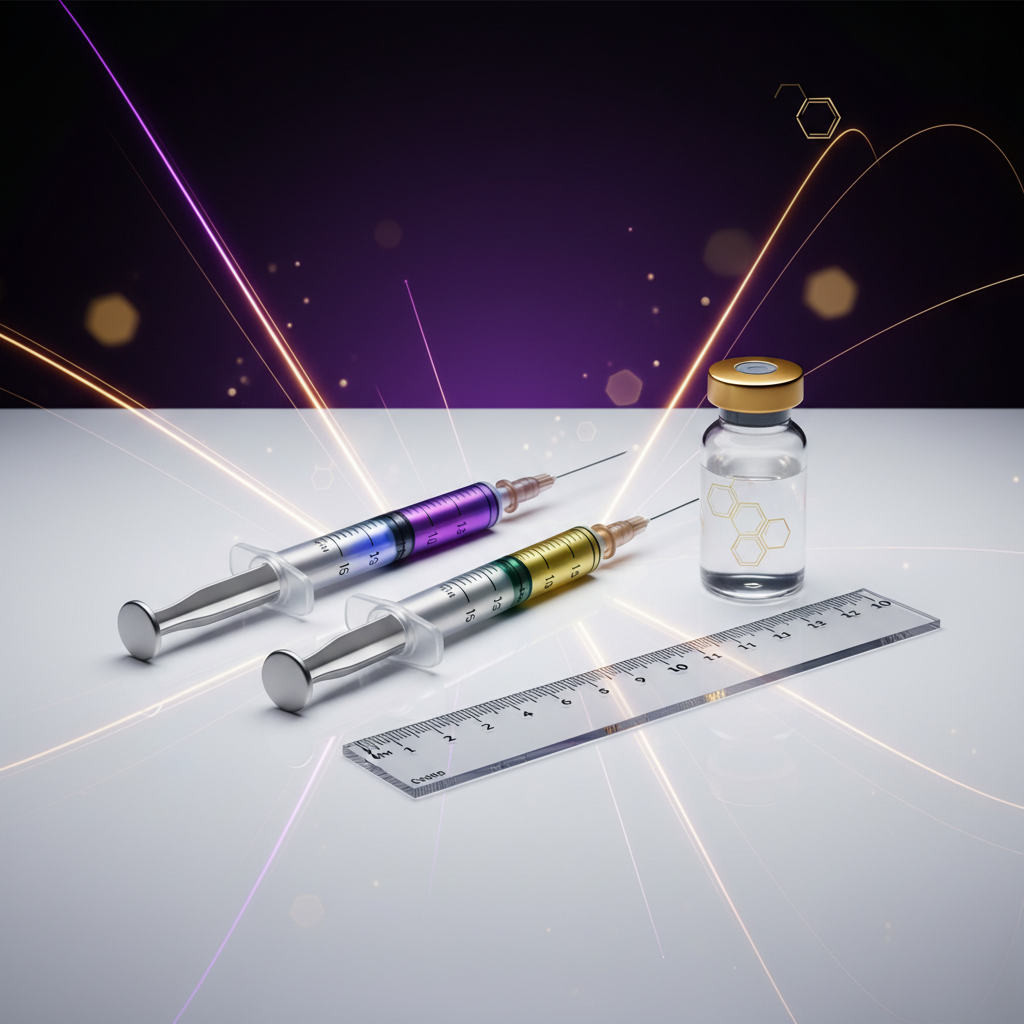
Why Syringe Selection Matters More Than You Think
When you're working with research-grade peptides, precision isn't optional — it's the whole game. Even a small miscalculation in volume can skew your data, waste expensive compounds, or compromise the integrity of your experiment. Yet syringe selection is one of the most overlooked decisions a new researcher makes.
The good news? Once you understand the core differences between insulin syringes and standard syringes, the right choice becomes obvious. Let's break it down.
The Two Main Players: Insulin Syringes vs. Standard Syringes
Insulin Syringes: The Precision Workhorse
Insulin syringes were originally engineered for the highly consistent, small-volume dosing required in clinical settings. That same precision makes them a favorite among peptide researchers working with reconstituted compounds in solution.
- Volume range: Typically 0.3 mL, 0.5 mL, or 1 mL
- Graduation markings: Calibrated in units (U-100), where 100 units = 1 mL — ideal for fine-grained volume control
- Needle gauge: Usually 28G–31G (very fine), minimizing dead space and improving accuracy
- Needle length: Short (typically 5/16" to 1/2"), attached and non-removable in most models
For most peptide syringes applications in a research context, insulin syringes are the go-to choice. Their fine graduations allow for accurate measurement of small volumes — often in the 0.05–0.5 mL range — which is exactly where peptide solutions typically land after reconstitution.
Standard (Hypodermic) Syringes: Versatile but Less Precise at Small Volumes
Standard syringes come in a much wider range of sizes — from 1 mL all the way up to 60 mL — and feature detachable needles with interchangeable gauges. They're workhorses for general lab use, but their broader graduation markings can introduce error when you're trying to measure small, precise volumes.
- Volume range: 1 mL to 60 mL and beyond
- Graduation markings: Calibrated in mL or fractions of mL (e.g., 0.1 mL increments on a 1 mL syringe)
- Needle gauge: Varies widely — 18G to 27G are common for lab use
- Needle length: Variable, with removable and interchangeable needles
Standard syringes shine when you're reconstituting peptide vials with bacteriostatic water or transferring larger solution volumes. They're less ideal for the final measurement step when working with small, precise amounts.
Decoding Syringe Gauge: What the Numbers Mean
The syringe gauge refers to the diameter of the needle — and here's the counterintuitive part: the higher the gauge number, the thinner the needle.
A 31G needle is significantly finer than an 18G needle. Thinner needles are gentler on septa and minimize dead volume — both critical considerations for accurate peptide measurement.
Here's a quick reference for common gauges in research settings:
- 18G–21G: Larger bore — best for drawing up and transferring reconstitution solvents (e.g., bacteriostatic water)
- 25G–27G: Mid-range — suitable for general lab transfers with moderate precision
- 28G–31G: Fine gauge — ideal for precise, small-volume measurements with peptide solutions; minimal dead space
For most peptide research workflows, researchers use a larger gauge needle (lower number) to reconstitute the vial, then switch to a finer gauge insulin syringe for accurate measurement. This two-step approach protects both your compound and your data.
Understanding Volume Markings: Units vs. Milliliters
This is where new researchers often get tripped up. Insulin syringes are marked in Units (U-100), while standard syringes are marked in milliliters (mL). They measure the same physical volume — but the scale looks different.
- 100 Units on a U-100 insulin syringe = 1.0 mL
- 50 Units = 0.5 mL
- 10 Units = 0.1 mL
When calculating volumes for your research preparations, always confirm which unit system your syringe uses and convert accordingly. Keeping a simple conversion reference at your workstation is a smart habit that prevents costly errors.
Minimizing Dead Space: A Detail That Adds Up
Dead space — the small amount of liquid that remains in the needle and hub after the plunger is fully depressed — can meaningfully affect accurate measurement in small-volume research work.
Insulin syringes are designed with low dead space or even zero dead space (when the needle is integrated into the barrel). Standard syringes with detachable needles tend to have more dead space at the Luer connection point. For small-volume precision, this difference matters.
When your research demands tight accuracy, opt for insulin syringes with fixed, integrated needles to eliminate this variable entirely.
Choosing the Right Syringe: A Quick Decision Guide
- ✅ Use an insulin syringe when measuring small volumes of reconstituted peptide solution (under 1 mL), when precision is critical, or when minimizing dead space is important.
- ✅ Use a standard syringe when adding reconstitution solvent (bacteriostatic water) to a peptide vial, handling larger volumes, or transferring solutions between containers.
- ✅ Match your gauge to the task: coarser for transfers, finer for measurement.
- ✅ Always use a fresh syringe for each preparation to maintain sterility and measurement integrity.
Stock Your Lab Right
Having both insulin syringes and standard syringes on hand isn't redundant — it's smart lab practice. Each tool serves a distinct purpose in the peptide research workflow, and using the right one at the right step is what separates clean data from compromised results.
At RP Wellness, we carry the research supplies you need to work with confidence — including high-quality syringe options available as add-ons with your peptide orders. Equip your workspace properly from day one.
All peptide compounds and research supplies from RP Wellness are intended for laboratory research use only and are not for human consumption, veterinary use, or clinical application.