
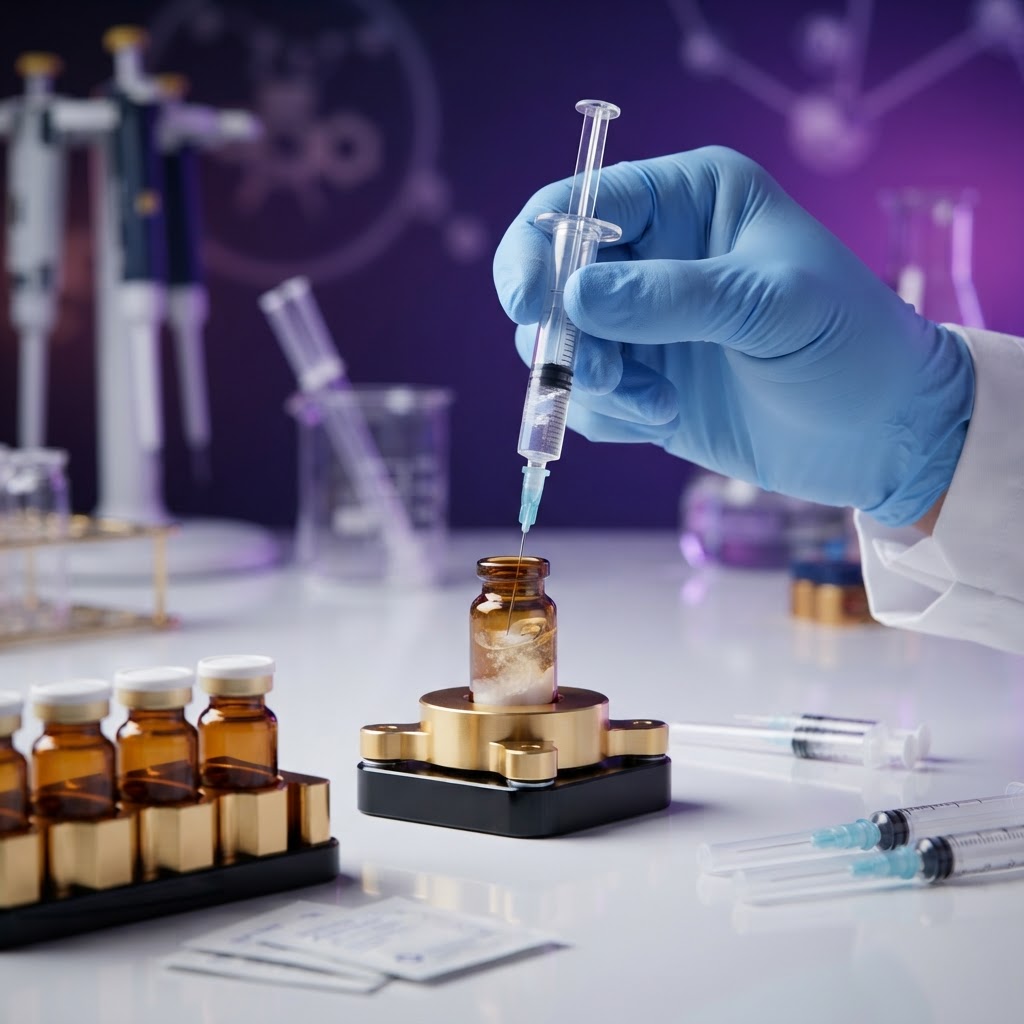
Why Reconstitution Matters More Than You Think
You've sourced high-purity, research-grade lyophilized peptides. The vial looks pristine. But here's the truth most guides skim over: improper reconstitution is one of the most common reasons peptide research yields inconsistent results. Aggregation, degradation, contamination — all of these can happen at the mixing stage, before your experiment even begins.
This guide is built for laboratory researchers and curious biohackers who want a clear, reliable protocol — not a vague overview. Let's go step by step.
What Is a Lyophilized Peptide?
Lyophilization (freeze-drying) removes water from a peptide solution under vacuum, leaving behind a dry, stable powder or cake. This format extends shelf life dramatically and protects peptide integrity during storage and shipping.
Before use in any in vitro or analytical assay, the peptide must be reconstituted — that is, dissolved back into a suitable solvent to create a usable solution.
What You'll Need Before You Start
- Lyophilized peptide vial (research-grade, from a verified supplier)
- Bacteriostatic water (BW) or another appropriate solvent (see solvent selection below)
- Sterile syringes and needles (1 mL insulin-style syringes are common)
- Alcohol swabs (70% isopropyl alcohol)
- Clean, sterile workspace — laminar flow hood if available
- Marker or label tape for dating vials
Research Note: All reconstituted peptides described here are intended strictly for laboratory, in vitro, and analytical research purposes only. Not for human or veterinary use.
Solvent Selection: Choosing the Right Vehicle
Not all peptides dissolve the same way. Solvent choice directly affects solubility, stability, and downstream assay performance.
Bacteriostatic Water (Most Common)
Bacteriostatic water contains 0.9% benzyl alcohol, which inhibits microbial growth and extends the usable life of your reconstituted solution (typically 28–30 days refrigerated). It is the most widely used solvent for research peptides and is appropriate for the majority of sequences.
Sterile Water for Injection (SWFI)
Use SWFI when benzyl alcohol may interfere with your assay or when working with particularly sensitive peptides. Note: solutions made with SWFI should be used promptly, as there is no bacteriostatic agent present.
Acetic Acid (0.1% – 1%)
Hydrophobic or positively charged peptides (e.g., many growth hormone-related sequences) may require dilute acetic acid to achieve full dissolution. Start with 0.1% and increase only if needed.
DMSO or Other Organic Solvents
Reserved for highly hydrophobic peptides that are insoluble in aqueous solutions. Use sparingly and be aware of DMSO's impact on cell membranes in biological assays.
What Is the Correct Ratio of Bacteriostatic Water to Peptide?
This is one of the most-searched questions in peptide research — and the answer depends on your desired working concentration. Here's a practical framework:
- Standard working stock: Add 1–2 mL of bacteriostatic water per 1–5 mg of peptide to achieve a concentration of 1–5 mg/mL.
- For precise assay concentrations: Use the formula — C = m / V (Concentration = mass ÷ volume). If you have 5 mg of peptide and add 5 mL of BW, your stock concentration is 1 mg/mL (1000 µg/mL).
- Dilution from stock: Most researchers prepare a concentrated stock and dilute further using sterile PBS or BW for assay-specific concentrations (e.g., 100 µg/mL or 10 µg/mL).
Always record your target concentration before you begin, and label each vial immediately after preparation with the peptide name, concentration, solvent, and date.
Step-by-Step Reconstitution Protocol
Step 1: Prepare Your Workspace
Wipe down your work surface with 70% isopropyl alcohol. If a laminar flow hood is available, use it. Allow all materials to reach room temperature before beginning — introducing cold solvent to a cold lyophilized vial can cause condensation and affect dissolution.
Step 2: Swab and Inspect
Wipe the rubber stopper of both the peptide vial and the solvent vial with a fresh alcohol swab. Inspect the peptide for visible clumping or discoloration — if in doubt, contact your supplier.
Step 3: Draw Your Solvent
Using a sterile syringe, draw your calculated volume of bacteriostatic water (or chosen solvent). Remove any air bubbles by gently tapping and depressing the plunger.
Step 4: Add Solvent Slowly — This Step Is Critical
Insert the needle into the peptide vial at an angle so the solvent runs down the inside wall of the vial, not directly onto the lyophilized powder. This gentle approach prevents foaming and mechanical shearing, both of which can degrade peptide structure.
Do not shake the vial. Agitation is one of the leading causes of peptide aggregation and degradation during mixing.
Step 5: Swirl Gently
Roll the vial slowly between your palms or use a gentle circular motion until the peptide is fully dissolved. Some peptides may take a few minutes. If the solution remains cloudy after several minutes, check your solvent choice — you may need to try a co-solvent or adjust pH.
Step 6: Label and Store
Label your vial clearly: peptide name, concentration, solvent, reconstitution date. Store reconstituted peptides at 2–8°C (refrigerated) for short-term use, or at –20°C for longer-term storage. Avoid repeated freeze-thaw cycles — aliquot into smaller volumes if needed.
How to Avoid Peptide Degradation During Mixing
Degradation at the reconstitution stage is preventable. Here are the key rules:
- Never vortex or shake — mechanical agitation causes aggregation and structural damage.
- Add solvent slowly to the side wall — direct impingement on the powder cake can cause localized denaturation.
- Avoid extreme temperatures — do not use heated water or expose peptides to direct sunlight during preparation.
- Use appropriate solvents — mismatched solvent pH or polarity is a primary cause of insolubility and degradation.
- Minimize air exposure — oxidation affects methionine- and cysteine-containing peptides especially. Work quickly and stopper vials promptly.
- Aliquot to avoid freeze-thaw cycling — each freeze-thaw cycle can reduce peptide activity in sensitive sequences.
Quality Check Before Use
A properly reconstituted peptide solution should be clear to slightly opalescent, with no visible particulates. If you observe cloudiness, particulates, or unexpected color changes, do not proceed with your assay. Document the observation and contact your supplier for guidance.
For high-stakes research, consider validating your reconstituted stock using UV absorbance (A280 for aromatic residues) or HPLC to confirm concentration and purity prior to use.
Final Thoughts from the RP Wellness Research Team
Reconstitution is where laboratory rigor begins. The peptide in that vial represents a significant investment — in cost, in planning, and in research potential. Taking five extra minutes to execute a sterile, methodical reconstitution protocol protects that investment and keeps your downstream data trustworthy.
At RP Wellness, our lyophilized research peptides are manufactured to the highest purity standards. We're committed to supporting not just your supply needs, but your scientific process — from vial to result.
All peptide products offered by RP Wellness are intended exclusively for in vitro research, laboratory analysis, and scientific study. They are not intended for human or animal consumption.