
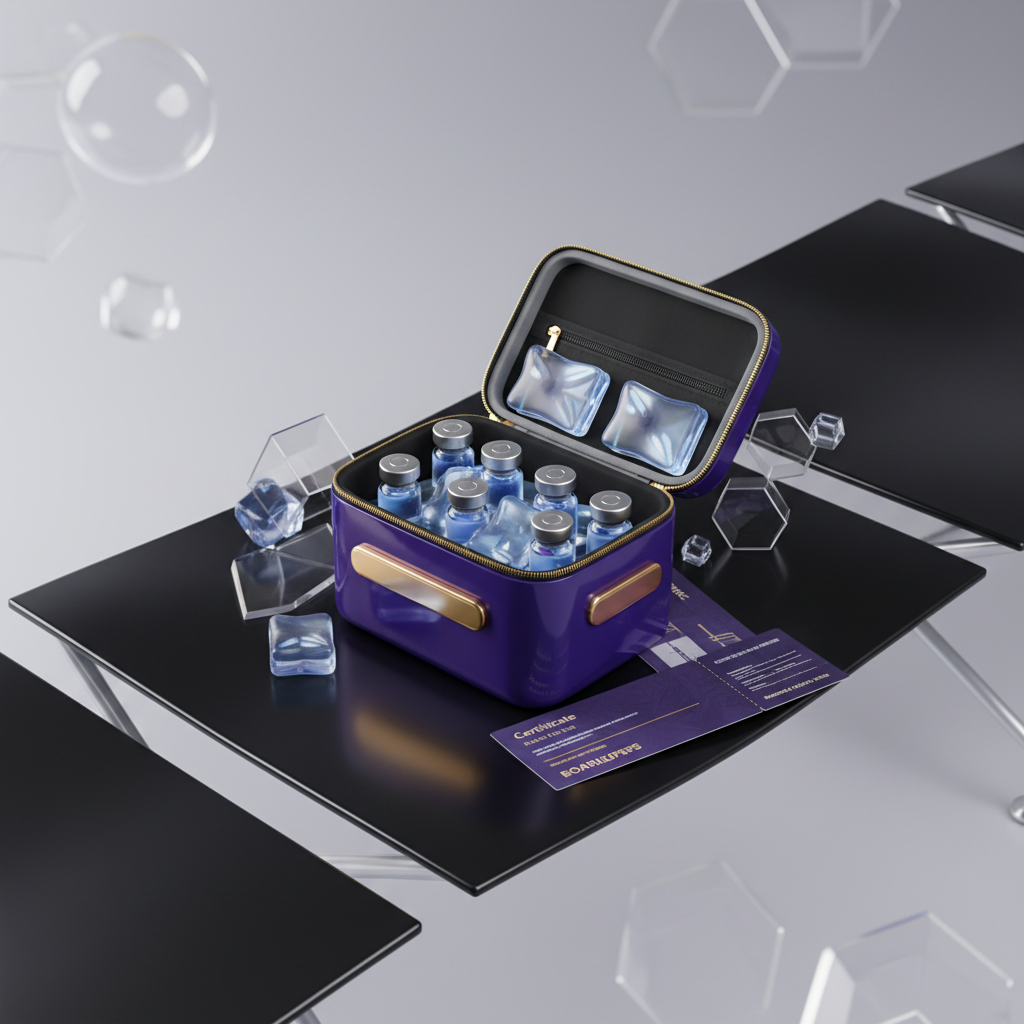
Why Peptide Transport Is More Nuanced Than You Think
You've invested in high-quality, research-grade peptides. The last thing you want is to arrive at a conference, a remote lab, or a field research site only to discover your compounds have degraded — or worse, been flagged at a security checkpoint. Traveling with peptides is a surprisingly under-discussed topic in the research community, yet it's one of the most practically relevant challenges researchers face.
Whether you're a traveling researcher, a remote lab worker, or a biohacker attending a symposium, this guide breaks down everything you need to know about peptide transport, cold storage travel, and keeping your research compounds viable from point A to point B.
Understanding Peptide Stability: The Enemy Is Heat (and Time)
Before we talk logistics, it helps to understand why peptides are so sensitive to transport conditions. Most lyophilized (freeze-dried) peptides are relatively stable at room temperature for short periods — but heat, humidity, and light can accelerate degradation rapidly.
- Lyophilized peptides: Generally stable at room temperature for days to a few weeks if kept dry and away from light. Still, cold storage is best practice.
- Reconstituted peptides: Once dissolved in bacteriostatic water or another solvent, stability drops significantly. These must be kept cold (2–8°C) and used within a defined window.
- Heat exposure: Even a few hours above 25–30°C can begin to compromise peptide integrity, especially for more fragile sequences.
The bottom line: cold chain integrity matters most for reconstituted compounds, while lyophilized vials offer more transport flexibility — but never infinite tolerance.
Cold Storage Travel: Keeping Peptides Cool on the Go
Maintaining the right temperature during transit is the #1 priority. Here's a tiered approach based on trip duration:
Short Trips (Under 24 Hours)
A quality insulated travel case with a gel ice pack or phase-change cooling insert is usually sufficient. Look for cases designed for insulin or biological samples — they're compact, TSA-friendly, and maintain temperatures for 24–48 hours.
Longer Trips (1–5 Days)
Consider a portable electric cooler or a high-performance passive cooler with dry ice. If using dry ice, be aware of airline restrictions — most carriers limit dry ice to 2.5 kg (5.5 lbs) per passenger and require it to be in a vented container. Always declare it at check-in.
Extended Research Travel
For week-long or longer trips, the most reliable approach is to ship your compounds ahead to your destination via a temperature-controlled courier, rather than carrying them personally. Services like FedEx Custom Critical or UPS Temperature True offer validated cold-chain shipping for research materials.
Pro Tip: Always include a temperature data logger (a small digital device that records ambient conditions throughout transit) in your shipment or travel case. It's an inexpensive way to verify cold chain integrity upon arrival.
TSA & Airport Security: What You Need to Know
Carrying research compounds through airport security is legal in most jurisdictions when done correctly, but preparation is key to avoiding delays or confiscation.
Documentation Is Your Best Friend
Always carry printed documentation for your compounds, including:
- Purchase receipts or invoices from your supplier (e.g., RP Wellness)
- Certificate of Analysis (CoA) identifying each compound
- A brief written statement clarifying the compounds are for research use only, not for human consumption
- Your institutional affiliation or research credentials, if applicable
Packaging Matters
Keep compounds in their original labeled vials whenever possible. Unlabeled or ambiguously packaged substances are far more likely to attract scrutiny. If you're carrying liquid reconstituted peptides, be mindful of the TSA 3-1-1 liquids rule for carry-on bags (containers must be 3.4 oz / 100 ml or less). Medical liquids and research reagents may be exempt with documentation, but clearing this with the airline in advance is wise.
Checked vs. Carry-On
For lyophilized peptides, carry-on is generally preferable — checked luggage holds can experience significant temperature fluctuations. For reconstituted compounds with proper cold storage, either may work depending on your cold pack duration.
International Shipping & Research Compound Regulations
This is where things get more complex. Research compound shipping across international borders is governed by a patchwork of national regulations, and what's permissible in one country may require permits — or be restricted — in another.
Key Considerations for International Transport
- Customs declarations: Always declare research compounds accurately on customs forms. Mislabeling or under-declaring can result in seizure and legal consequences.
- Country-specific regulations: Some peptides fall under controlled substance analogues in certain countries. Research the specific regulations of your destination country before travel or shipment.
- Import permits: Some jurisdictions require research import permits for biological materials. Check with the receiving institution or a customs broker.
- Quantity limits: Even where permitted, large quantities may trigger additional scrutiny or require supplementary documentation.
Important Disclaimer: All RP Wellness compounds are strictly for in vitro and laboratory research use only. They are not intended for human or veterinary consumption. Researchers are solely responsible for ensuring compliance with all applicable local, national, and international regulations regarding the transport and use of research compounds.
Practical Packing Checklist for Traveling Researchers
Before you head to the airport or drop your package at a courier, run through this checklist:
- ✅ Compounds in original labeled vials
- ✅ Certificate of Analysis (CoA) printed for each compound
- ✅ Purchase invoice / supplier documentation
- ✅ Insulated travel case with appropriate cold pack
- ✅ Temperature data logger included
- ✅ Research use statement prepared
- ✅ Destination country regulations verified
- ✅ Dry ice declaration completed (if applicable)
- ✅ Shipping carrier's biological/chemical materials policy reviewed
Final Thoughts: Preparation Is the Best Preservation
Traveling with research peptides doesn't have to be stressful. With the right cold storage strategy, proper documentation, and an understanding of the regulatory landscape, you can transport your lab supply travel kit confidently and keep your compounds research-ready upon arrival.
At RP Wellness, we supply rigorous, research-grade peptides with full Certificates of Analysis precisely because we understand that researchers need compounds they can trust — in the lab and in transit. Plan ahead, stay organized, and your science won't miss a beat.